

- Politics of female body in art: India’s Dancing Girl to canvas
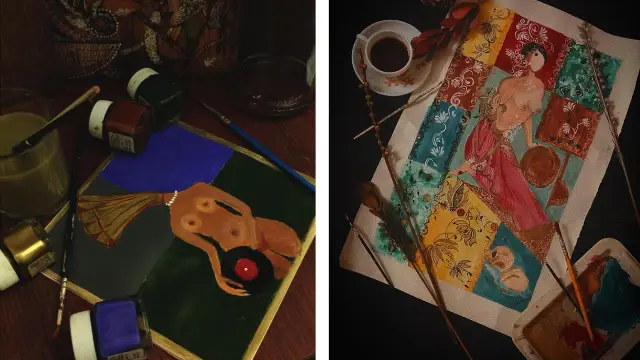 In June 2026 a government textbook covered the torso of the 4,500-year-old Dancing Girl. Kashish Raj Sharma, a painter and anthropologist, traces how art has treated the female body, from Indian goddesses to the French Revolution, and why that matters for classrooms, violence statistics and women’s autonomy in India today.

- UPI MDR has a blind spot – mid-sized businesses
 A Rs 300 cap means the biggest UPI payments pay the smallest share. The new MDR squeezes slim-margin shops, risks pushing them back to cash and sets back Digital India, and offers three changes to make the UPI fee fairer for small businesses.
- Citizen participation in democracy doesn’t end at ballot box
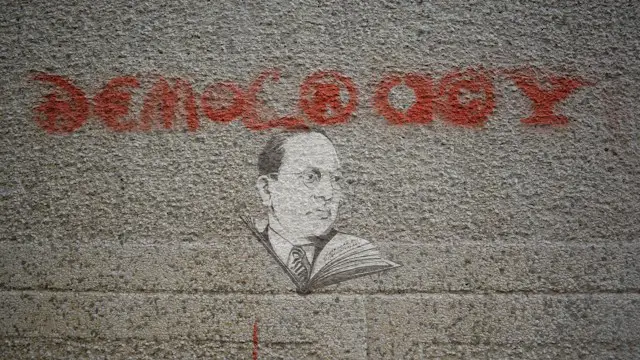 When did citizen participation become something that ends at the ballot box? The CJP movement shows why democracy needs citizens between elections.
- India learns state’s role in market economy
 For decades, India’s economic debate was framed through a simple story. The state planned, regulated and licensed excessively; private enterprise was constrained; then came 1991, when licences were dismantled, the economy opened and growth accelerated. The conclusion seemed obvious: the state was the problem and the market was the solution.
- Measure India’s AI jobs boom by job quality, not headcount
 More jobs than layoffs sounds like good news for India’s AI-era labour market — but the headline number hides a harder question: are these new roles building real skills, or just adding headcount? A four-point framework for judging the difference.
- Is GDP still the best development yardstick?
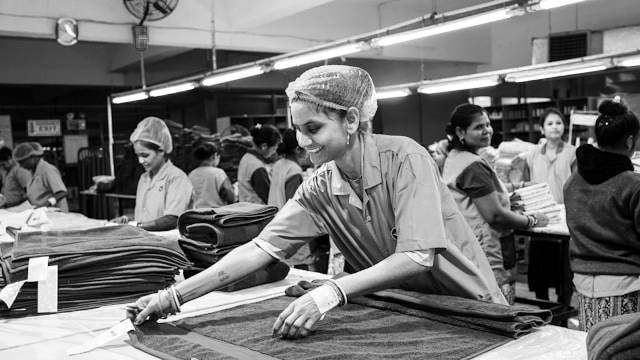 A rising GDP can hide as much as it reveals — inequality, unpaid work, environmental costs, none of it shows up in the headline number. Drawing on India’s HDI data, this piece argues that GDP remains necessary, but was never meant to answer whether people are actually better off.

- Citizen participation in democracy doesn’t end at ballot box
- Can individuals ‘develop’ if climate worsens work conditions?
- Hindutva forces attack Jadavpur University as ‘dimagi Naxal’ hunt comes home
- Independence Day: ‘Azadi’ continues to haunt Modi’s BJP
- CJP protest, Pradhan’s resignation: New public sphere rises
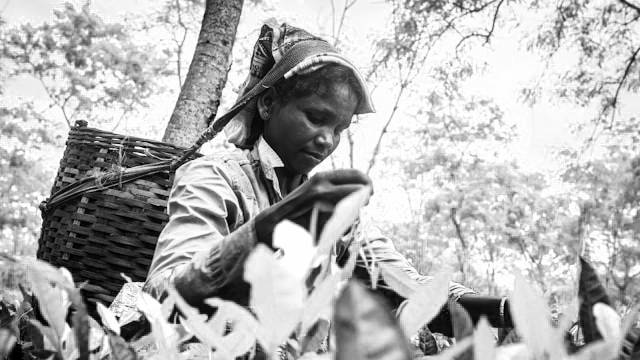
- Beyond binary: India recognises gender diversity, but do its institutions?
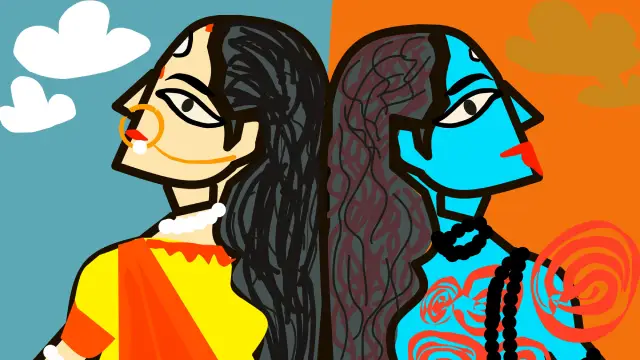
- From a caste symbol to a national icon: why more young women are discovering Ambedkar
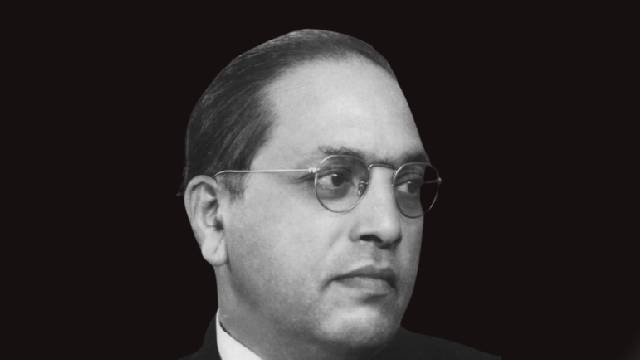
- All Muslims are terrorists: Children fall prey to bigotry
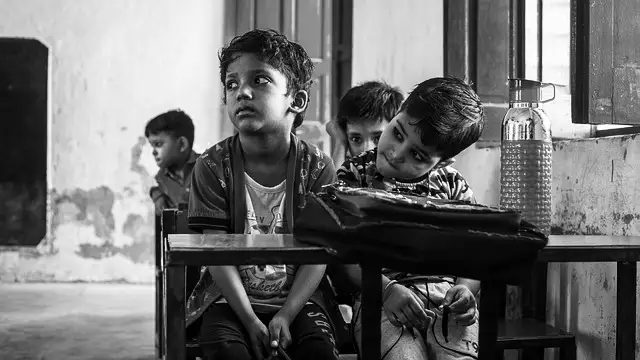
- Cauliflower returns to haunt Bihar, but whom exactly?

- Wage labour, gender: India’s working women’s struggle for recognition
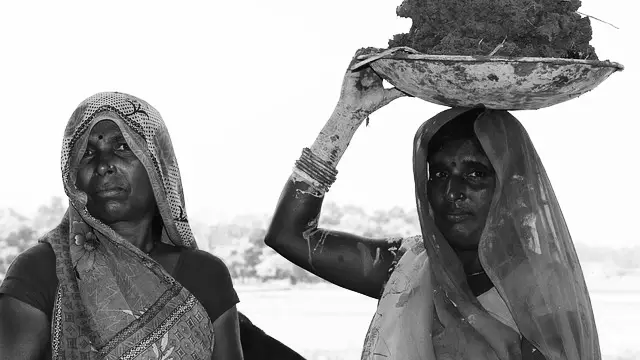

- Evicting hawkers or cleansing cities for ‘Corporate India’?
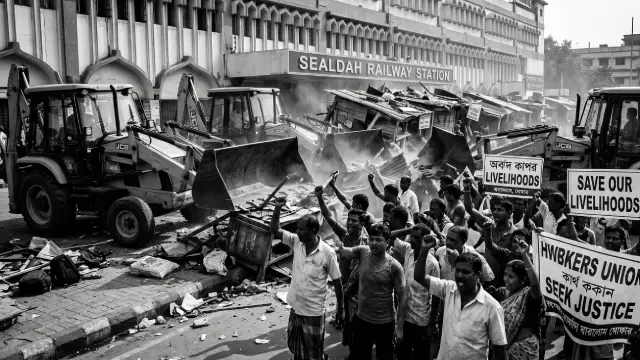 The BJP government in West Bengal claims its eviction drive against hawkers is about reclaiming public land. Yet millions of Indians depend on informal markets for affordable goods and livelihoods. As corporate power expands, the informal economy increasingly finds itself under sustained attack.
- Bangladesh: Mob rule burns democracy
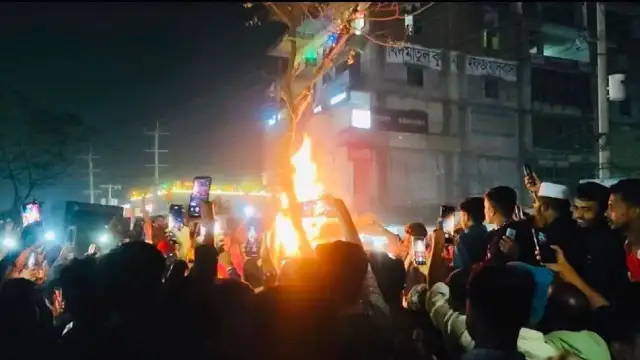 The interim government talks of reform. The streets tell a different story.
- The Zionist Israeli attack on Palestine has dug the grave for the West in the Middle East
 Did the West just dig its own grave in the Middle East and in the Global South by supporting the Zionist Israeli attack on Palestine?
- On Eid, Indian Muslims must be thankful enough
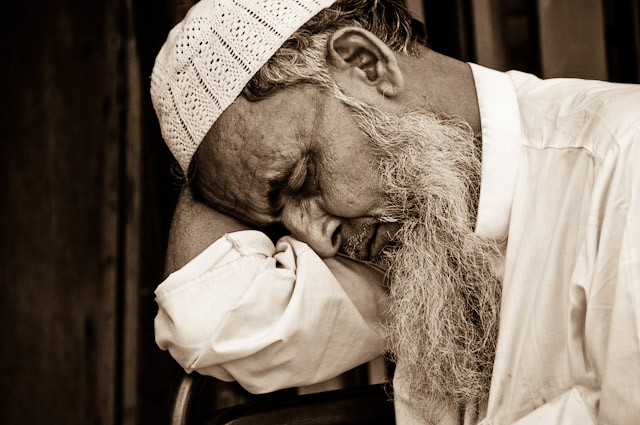 It’s Eid; and beneath the typical happy photos, the pain, agony and tears of Indian Muslims, especially of West Bengal will remain hidden.
- Anti-Muslim violence during Ram Navami celebration: new normal in Modi’s New India
 The recent surge in anti-Muslim violence during Ram Navami celebrations across different states exhibit Modified India’s disastrous journey.
- What Ambedkar saw in demand for Pakistan?
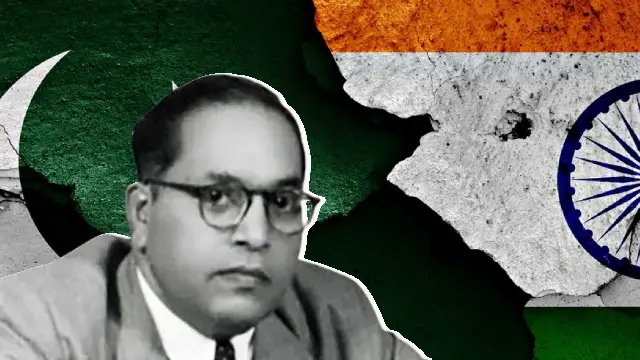 Ambedkar approached the Pakistan issue with realism and intellectual honesty. Unlike the Muslim League, he refused to treat communal disturbances as the main cause of partition.
- India’s festival season drives economic life
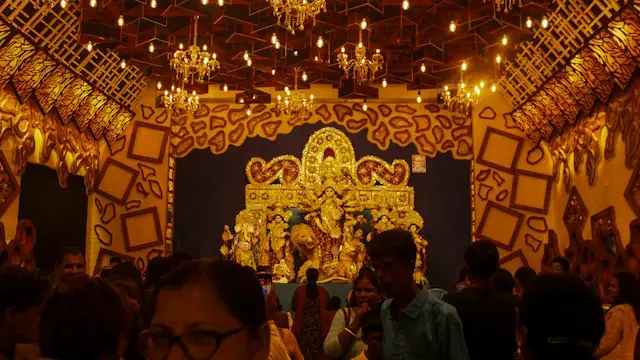 Behind every garland, plate of snacks and handmade toy in the festival season is a small trader who bought stock before knowing how many customers would come. The author looks at the risks, rewards and fair conditions that small businesses and street vendors need across India’s festival markets.
- India can’t wait until 2047 to build ‘Viksit Bharat’
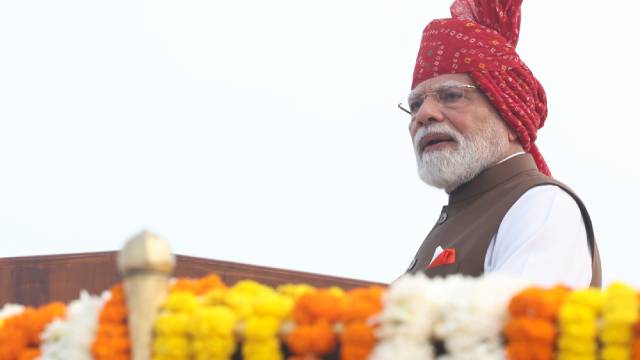 Training ten million Indians in AI sounds impressive, but scale isn’t the same as capability. This piece argues that Viksit Bharat by 2047 depends on decisions India makes now — not in the years just before the deadline.
- Cage called freedom: Who is really free?
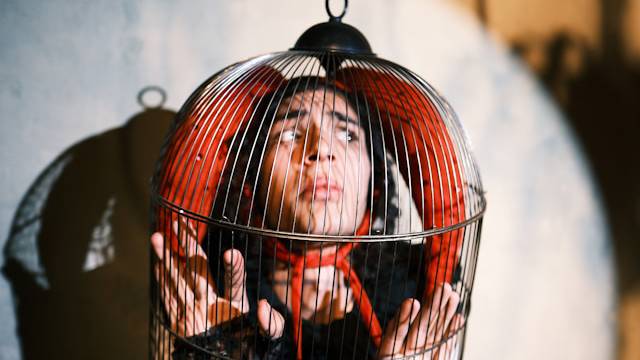 Nobody stands over you with a whip, yet the alarm still rings, the notifications still pull, the metrics still judge. Drawing on Max Weber’s “iron cage,” this essay asks whether today’s freedom is really freedom at all — or just a cage with better lighting.
- What is next for the left-wing politics after the Congress’s victory in Karnataka?
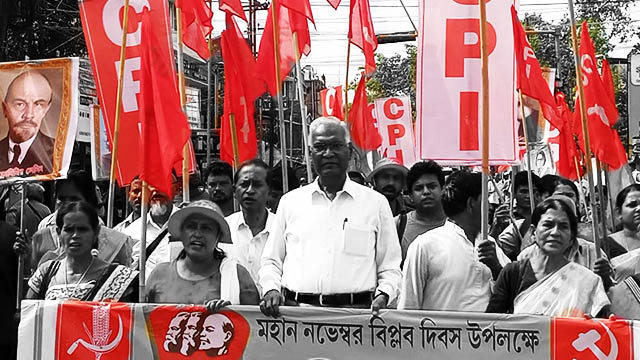 While the Congress defeated the BJP in Karnataka, the threat of Hindutva fascism still looms large over the state, which only the left can combat.

- Live-in relationships in India: legal rights, statutory frameworks and social realities
 Live-in relationships in India have no single law, yet courts have built protections through Article 21 and the domestic violence act. Legal researchers Navjot Kaur and Ritu Malik trace the key Supreme Court rulings, maintenance and adoption rules, Uttarakhand’s mandatory 30-day registration and the social friction that couples still face.
- What Claude and ChatGPT reveal about AI’s future?
 The debate isn’t really Claude versus ChatGPT, and it isn’t even fundamentally about intelligence. It is about philosophy.
- India’s AI transition needs paid-practice floor for young workers
 A paid-practice floor would attach a simple condition to public support for India’s ambitious AI adoption.
- India’s AI bet: how to win the data centre race
 Hyperscalers are pouring billions into Indian AI data centres, drawn by cheap land, power and tax breaks. This piece asks what India is actually getting in return — and whether “sovereignty” means much when the chips still come from Nvidia.
- AI knows no borders: India must lead global fight for rules
 From deepfakes on the campaign trail to algorithms deciding who gets a loan, AI’s risks cross borders as easily as its benefits. This piece argues India can’t afford to sit out the coming fight over global AI governance.
- Politics of female body in art: India’s Dancing Girl to canvasIn June 2026 a government textbook covered the torso of the 4,500-year-old Dancing Girl. Kashish Raj Sharma, a painter and anthropologist, traces how art has treated the female body, from Indian goddesses to the French Revolution, and why that matters for classrooms, violence statistics and women’s autonomy in India today.
- Beyond binary: India recognises gender diversity, but do its institutions?Questions remain about India’s bureaucracy’s approach to fairly implementing laws protecting India’s gender diversity.
- Nana Patekar’s films and legacy: the voice that refused to be ordinary
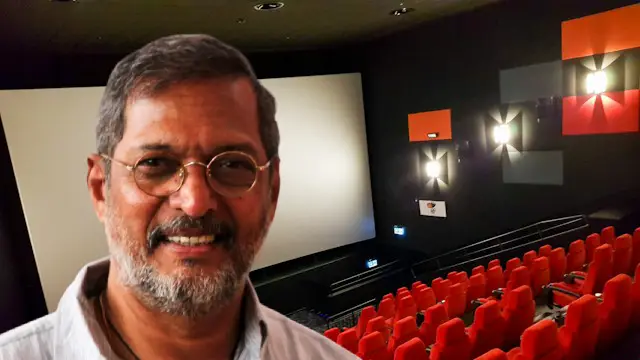 Menace in Parinda, public anger in Krantiveer, an ageing actor’s sorrow in Natsamrat and laughter in Welcome: Nana Patekar, who died at 75, refused to be confined to one image.
- From a caste symbol to a national icon: why more young women are discovering AmbedkarFor decades, Ambedkar’s legacy was read almost entirely through caste. Now, young women across caste lines are finding another Ambedkar — the one who fought for the Hindu Code Bill and women’s legal equality. This piece asks what that discovery means, and where it can go wrong.
- Cinema in Tamil Nadu: Social justice must reach the last row too
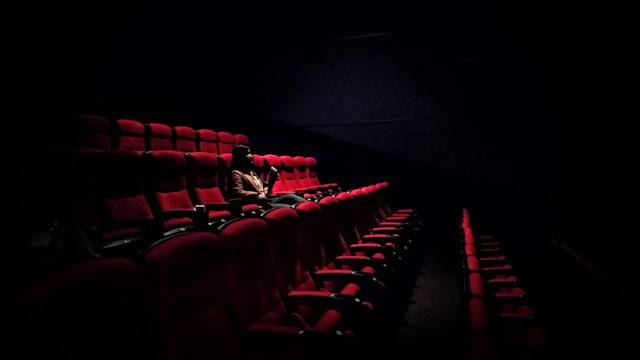 A trip to the cinema was once affordable for every Tamil household, rich or poor, sharing the same screen from different rows. As prices climb and affordable seats shrink, this piece asks whether Tamil Nadu’s social justice tradition should extend to the multiplex too.

- Psychological safety in education: why diversity is hollow without voice
 Psychological safety decides whether diverse students are heard. In a US survey, 83% of those facing bias called it subtle.
- From student voice to political instrument: CJP’s changing face
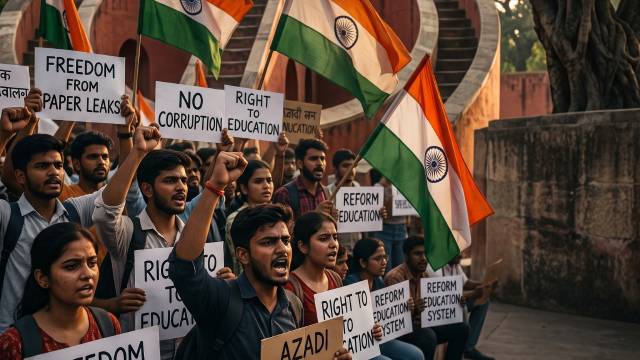 CJP turned student anger over paper leaks and exam irregularities into one of India’s most visible youth movements. But as political flags and old party links surface, a harder question emerges: is CJP still a platform for students, or has it become a tool for someone else’s politics?
- Secondary education can’t remain secondary in India
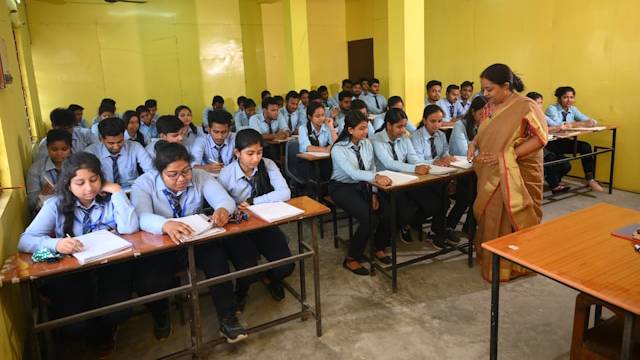 India’s push to expand elementary education has worked — but secondary schooling tells a different story. With government schools scarce, especially in states like UP, private unaided schools are filling the gap, often without matching learning outcomes. A look at what that means for India’s youngest generation.
- Are Jammu & Kashmir’s higher education institutions future-ready?
 Enrolment in Jammu and Kashmir’s colleges and universities has grown steadily, but access alone no longer defines success. This piece asks whether the region’s higher education institutions have the faculty, research culture and infrastructure to meet the demands of the years ahead.